- ✓ Open 24 hours, 7 days a week
- ✓ Serving San Bernardino County, Adelanto, Apple Valley and 22 more areas
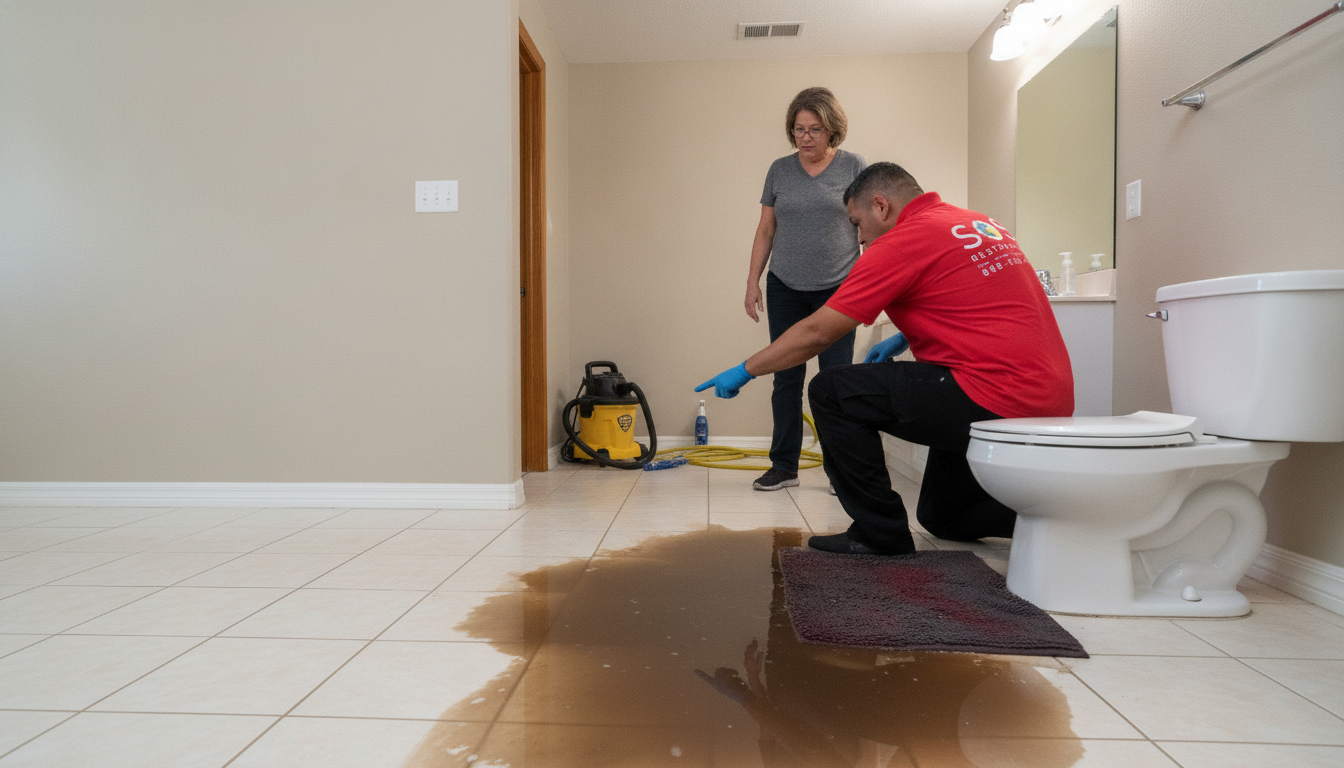
Before arranging sewage cleanup, check what the work will cover, what you should do before it begins, and how completion will be explained. Use those three questions to turn an urgent conversation into a clear plan. The checklist below helps you organize that conversation without having to decide the cleanup approach yourself.
1. Check exactly what the cleanup will include

Start with the scope: “Which affected areas and items does the proposed sewage cleanup cover?” Describe what you have noticed, where you noticed it, and whether you are asking about one space or several. Keep your observations separate from your assumptions; you can describe a visible condition without deciding what caused it or how it should be treated.
Ask for a distinction between the work included in the proposal and anything that would need a separate decision. SOS Restoration Of San Bernardino County offers sewage cleanup, water extraction, structural drying, and contents cleaning and restoration. If you want to discuss more than sewage cleanup, name those needs directly and ask whether they belong in your proposed scope rather than treating the service list as a package.
Use these prompts during the conversation:
- ✓ Which rooms or areas are included?
- ✓ Are any affected belongings included in the proposed work?
- ✓ Does the proposal include water extraction or structural drying?
- ✓ What, if anything, would require separate approval?
2. Ask what to do before work begins

Your second question is: “What should I do—and avoid doing—before the cleanup starts?” Ask for instructions specific to the situation you have described. In particular, request guidance before entering the affected area, moving belongings, or attempting any cleanup yourself; do not make those decisions solely to prepare for a visit.
Also clarify access arrangements. Tell the business about any entry restrictions and ask what access it needs from you. If you will not be at the property, discuss who can authorize access and who should receive questions about the work. Confirm the next agreed contact or visit rather than treating an initial inquiry as a scheduled appointment.
Ask for a clear next action: what you need to do, what the business will do next, and when you should expect the next update.
3. Ask how completion will be explained
The third question is: “How will you explain what has been completed and anything that remains?” Ask this before agreeing to the work so you know what kind of handover to request. Keep the question tied to the proposed scope rather than asking only whether the property will be “finished.”
For example, if your proposal includes sewage cleanup and structural drying, ask how each part will be addressed in the completion discussion. If belongings are included, ask how their status will be communicated. Request a clear distinction between completed work, outstanding decisions, and any additional services being proposed.
You can also ask what records will be provided and whom to contact afterward. If you need a particular document for your own records or another party, name it before work begins and ask whether it can be supplied. Avoid assuming that a particular report, photograph set, or form is part of the arrangement.
4. Keep a short record of the answers
Make one note with three headings: scope, preparation, and completion. Under each, record the answer you received and any question still awaiting a response. Include the date of the conversation and the name of your contact so you can refer back to the discussion without reconstructing it from memory.
Use that note when reviewing a proposal. Match the written description to the areas and services you discussed, and ask about any difference before approving it. If the proposed work changes, request an explanation of what changed and whether that affects the price, timing, or decisions needed from you.
For an estimate, ask which charges are included and how additional work would be authorized. For scheduling, ask for the actual arrangement for your property. Keep an open question marked as open rather than filling it with an expectation.
5. Make the first call focused and useful
You do not need to identify the cleanup method before contacting the business. Prepare a brief description of your concern, the property’s location, and the areas or belongings you want to discuss. Then work through the three checks in order: scope, preparation, and completion.
SOS Restoration Of San Bernardino County offers sewage cleanup and serves San Bernardino County, including San Bernardino, Fontana, Ontario, Rancho Cucamonga, Redlands, and Victorville. The business is open 24 hours every day. When you call, ask about availability for your location and confirm the next step for your particular request.
Frequently asked questions
What should I ask first about sewage cleanup?
Ask what areas and items the proposed work will cover. Follow that with questions about what you should do before work begins and how completion will be explained.
Does SOS Restoration Of San Bernardino County offer structural drying?
Yes. Structural drying and water extraction are listed services, alongside sewage cleanup. Ask whether either service is included in the proposal for your property.
Can I contact the business outside normal daytime hours?
Yes. SOS Restoration Of San Bernardino County is open 24 hours a day, seven days a week. Ask about scheduling when you contact the business.
For help with sewage cleanup, call SOS Restoration Of San Bernardino County at 951-592-8161.